


Custom Pool Enclosure Installation in Saint Augustine: The Definitive Guide

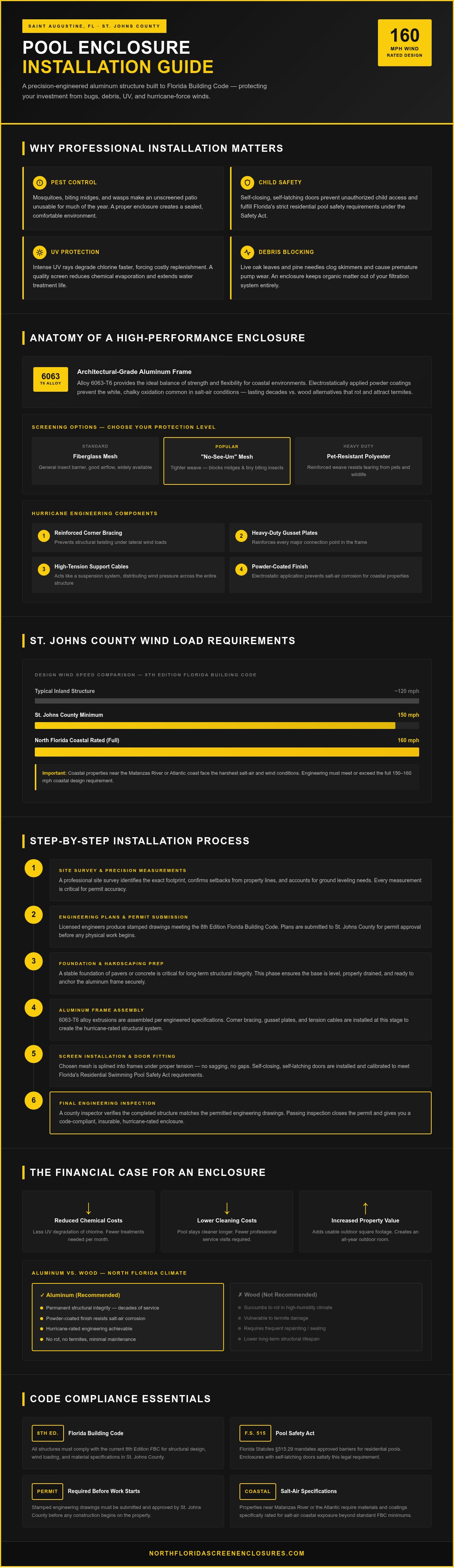
In Saint Augustine, a pool enclosure isn't just a screen; it's a precision-engineered aluminum structure that must be built to withstand coastal wind loads of 150 to 160 mph. You likely invested in a pool to create a private retreat, yet you often find yourself spending more time skimming leaves or dodging mosquitoes than actually swimming. It's exhausting to maintain a backyard that feels like it's constantly under siege by the Florida environment.
This guide provides the technical clarity you need for a professional pool enclosure installation that meets the rigorous 8th Edition of the Florida Building Code. We'll examine the specific structural requirements for St. Johns County, the importance of hurricane-rated engineering, and the step-by-step process of creating a durable, bug-free oasis. By the end, you'll understand how a properly installed enclosure reduces your chemical costs and adds lasting value to your North Florida home.
Table of Contents
Why Professional Pool Enclosure Installation is Essential for Florida Homes
Owning a pool in Saint Augustine offers a lifestyle of relaxation, but the local environment presents unique challenges that can quickly turn a backyard retreat into a maintenance burden. The coastal climate brings intense humidity, persistent pests, and heavy organic debris that can overwhelm an unprotected water feature. A professional pool enclosure installation serves as the first line of defense against these elements, transforming an exposed basin into a controlled, comfortable environment.
One of the most immediate benefits is the management of the "Florida bug" problem. In our region, mosquitoes, biting midges, and wasps can make an unscreened patio unusable for much of the year. Beyond pest control, these structures are vital for safety. Adhering to Swimming pool design and safety standards is a critical responsibility for every homeowner. Enclosures provide a sturdy physical barrier equipped with self-closing, self-latching doors. This setup helps prevent unauthorized child access and fulfills Florida's strict residential pool safety requirements, providing you with essential peace of mind.
Protecting Your Investment from the Elements
The North Florida sun is relentless. Intense UV rays don't just affect your skin; they actively degrade pool chemicals like chlorine, forcing you to replenish them more frequently to maintain water balance. A high-quality screen acts as a buffer, reducing chemical evaporation and extending the life of your water treatments. Additionally, the structure blocks organic debris such as live oak leaves and pine needles. This prevents organic matter from clogging skimmers and causing premature wear on your filtration pump. For properties near the Matanzas River or the Atlantic coast, the salt-air environment is particularly harsh. We utilize specific aluminum alloys and powder-coated finishes designed to resist the corrosion that typically destroys wood or inferior metal structures.
The Financial Logic of a Screened Enclosure
A pool enclosure installation offers a clear financial return through reduced operational costs. You'll likely see a decrease in your monthly spending on professional cleaning services and chemical supplies because the pool stays cleaner for longer periods. In terms of property value, a hurricane-rated enclosure increases your home's usable square footage. It effectively creates an outdoor room that remains clean and comfortable year-round. While wood structures might seem cost-effective initially, they often succumb to rot and termites in our humid climate. Aluminum framing provides a permanent solution that maintains its structural integrity for decades. In Saint Augustine, building a structure to modern hurricane codes is a practical way to protect your property and ensure long-term value.
The Anatomy of a High-Performance Pool Enclosure
A successful pool enclosure installation relies on the synergy of high-grade materials and precision engineering. It isn't merely about aesthetics; it's about creating a structural system capable of withstanding the intense physical pressures of the North Florida climate. Every component, from the primary beams to the smallest screw, must work in unison to maintain the tension and stability required for long-term performance. In Saint Augustine, where salt air and high humidity are constant factors, the quality of these materials determines whether an enclosure lasts five years or thirty.
The frame itself is typically constructed from architectural-grade aluminum alloys, such as 6063-T6, which offer an ideal balance of strength and flexibility. To prevent the white, chalky oxidation common in coastal environments, we utilize electrostatically applied powder coatings. This finish provides a durable barrier against corrosion. Beyond the frame, your choice of mesh matters. While standard fiberglass mesh works for many, homeowners often opt for pet-resistant polyester or "no-see-um" screens with a tighter weave. These materials ensure your backyard remains a private retreat while helping you stay compliant with the Residential Swimming Pool Safety Act, which sets the legal standards for pool barriers in our state.
Hurricane Ratings and Coastal Building Codes
In St. Johns County, engineering must account for wind speeds that can reach 150 to 160 mph. This requires more than just thick aluminum. Professional designs include reinforced corner bracing and heavy-duty gusset plates at every major connection point to prevent twisting. High-tension support cables are also integrated into the design. These cables act like a suspension system, distributing the immense pressure of storm winds across the entire frame rather than letting it focus on a single joint. This level of engineering is what separates a hurricane-rated structure from a standard screen porch.
Advanced Fasteners and Tapcon Replacement
The weakest link in many older structures is the hardware. Standard steel screws often rust within just a few years, leading to unsightly "bleeding" stains and eventual structural failure. We recommend using Nylo-tec or 304-series stainless steel fasteners because they resist the corrosive effects of our coastal air. Tapcons play a critical role here; they are specialized masonry screws that anchor the entire aluminum base track into the concrete or paver foundation, preventing the structure from shifting or lifting during a storm. If your existing hardware shows signs of corrosion, a professional Tapcon replacement is a vital maintenance step to preserve your home's structural integrity.
Design Options: Customizing Your Outdoor Living Space
A professional pool enclosure installation should do more than just protect your water; it should complement the architectural integrity of your property. In Saint Augustine, we see a wide variety of home styles, from historic Spanish colonial influences to modern coastal designs. Choosing the right roof profile and frame color ensures that your new structure feels like a natural extension of your living space rather than an afterthought. Customization allows you to tailor the height, shape, and features of the enclosure to suit your specific lifestyle needs and the unique wind patterns of your lot.
Choosing the Right Roof Profile
The roof shape is the most visible element of your enclosure and significantly impacts the interior atmosphere. The Mansard roof remains the most popular choice for North Florida homeowners. Its flat top and sloped sides create a sense of vast, open space, making even smaller pool decks feel significantly larger. For those looking to match the existing lines of their home, a Gable or A-frame roof provides a classic peaked look that mirrors traditional residential architecture. If your property is particularly exposed to high winds, a Dome or Hip roof offers superior aerodynamic performance by allowing air to flow smoothly over the sloped surfaces from any direction.
Mansard: Maximizes interior volume and provides a modern, clean aesthetic.
Gable: Features two sloping sides that meet at a ridge, ideal for matching gabled house roofs.
Dome: An arched profile that offers excellent wind deflection and a soft visual appearance.
Hip: Slopes upward from all four sides, providing a sturdy, multifaceted look.
Beyond the shape, we focus on matching the aluminum frame color to your home's existing soffit and fascia. This attention to detail creates a cohesive look that can significantly enhance your property's curb appeal and overall market value.
Hybrid Solutions: Pergolas and Patio Covers
Sometimes a standard screen isn't enough to meet your outdoor living goals. We often integrate Elite Roofing Systems into our designs to provide solid shade zones within or adjacent to the screened area. These insulated panels are perfect for protecting outdoor kitchens or lounge furniture from both the sun and rain. For a more decorative touch, aluminum pergolas offer a sophisticated way to define specific zones of your patio while maintaining airflow. If your project involves a multi-story home, we also specialize in aluminum balcony railings and tall enclosures that provide safety and bug protection for every level of your outdoor retreat. These integrated solutions allow you to create a versatile environment that functions perfectly regardless of the weather.
The Step-by-Step Installation Process in Saint Augustine
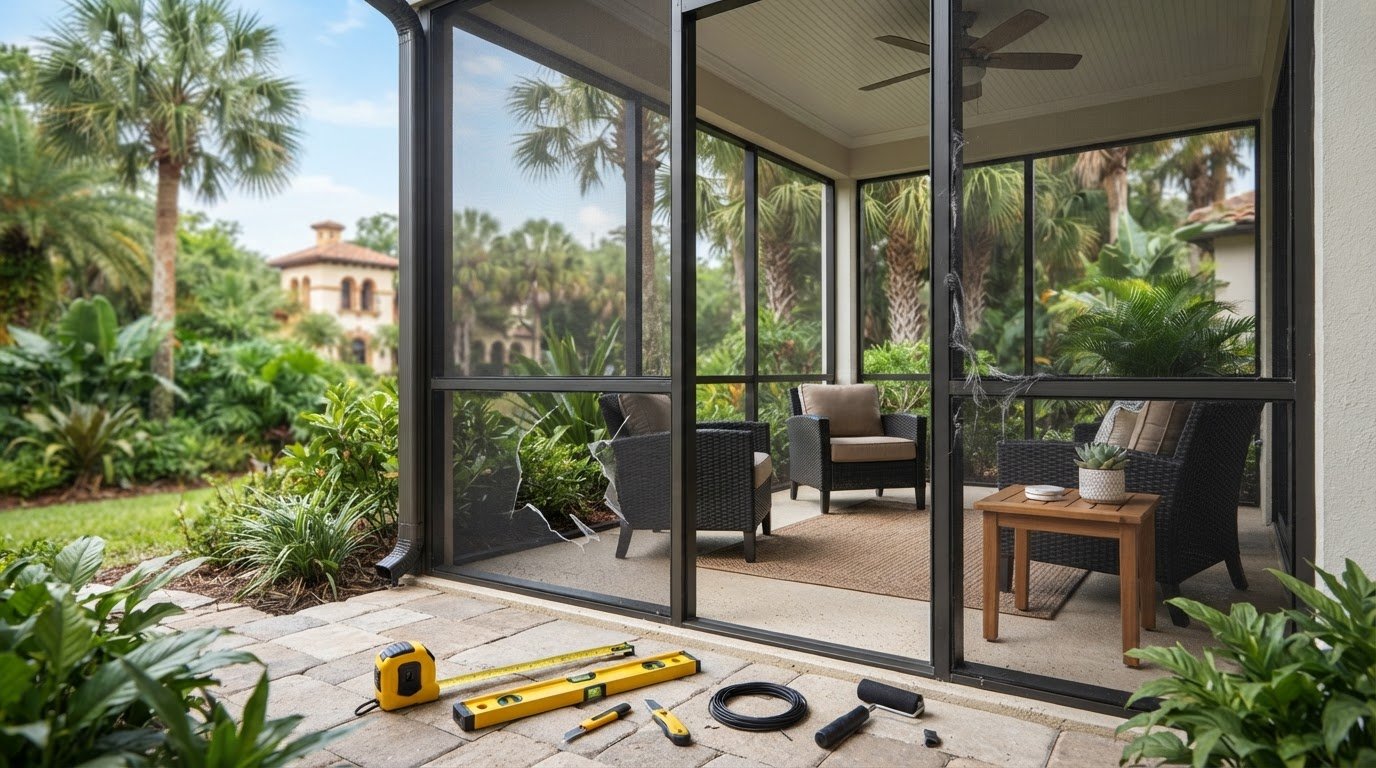
A professional pool enclosure installation in Saint Augustine is a methodical sequence that translates engineering blueprints into a physical structure. It begins long before the first piece of aluminum arrives on your property. Precision is the foundation of longevity; even a minor miscalculation in the initial site survey can lead to structural tension or drainage issues later. Our process ensures that every component is aligned with the specific topography of your backyard and the architectural requirements of your home.
From Permit to Final Inspection
Navigating the local regulatory landscape is a critical part of the timeline. In St. Johns County, a new pool enclosure is classified as a structural addition and requires a formal building permit. While recent 2026 regulations exempt some minor home improvements from permitting, this does not apply to structural aluminum work. We manage the submission of certified engineering drawings to ensure compliance with the 8th Edition Florida Building Code. Before any ground is broken, we also handle the utility line marking through Sunshine 811 to protect your home's infrastructure. Once the build is complete, a final structural inspection is performed to verify that the wind-load bracing and anchor points meet the required safety standards.
Site Preparation and Protection
Stability starts at the ground level. We verify that your pool deck or paver patio is level and capable of supporting the aluminum frame's weight. If the foundation is unsettled, it can cause the screen spline to pop or the doors to misalign over time. During the construction phase, we take specific steps to protect your existing landscaping and pool finish from debris. Proper drainage is another priority. We integrate gutter systems into the enclosure design to manage North Florida's heavy rainfall, directing water away from the foundation to prevent erosion or "ponding" near the base track.
The physical assembly follows a structured path to ensure maximum structural integrity:
Base Track Installation: The aluminum tracks are secured to the deck using high-grade Tapcons, creating a rigid footprint.
Vertical Member Assembly: Main support posts are raised and plumbed to ensure the frame is perfectly square.
Roof Truss Installation: Pre-assembled trusses are hoisted into place and secured with reinforced gusset plates.
Screen Wrapping: Each panel is individually rolled into the grooves using a durable spline, ensuring consistent tension across the structure.
Door and Hardware: Self-closing hinges and safety latches are installed and tested for smooth operation.
To begin the process with a professional assessment of your backyard, you can request a custom site survey from our team of local specialists.
Integrated Hardscaping: Pavers, Concrete, and Maintenance
A successful pool enclosure installation requires more than just high-quality aluminum; it demands a stable, well-engineered foundation. Many homeowners treat the enclosure and the pool deck as separate projects, but they are physically and structurally linked. In Saint Augustine, we often see enclosures installed on either poured concrete or paver patios. Each substrate requires a specific approach to anchoring and moisture management to prevent the structure from shifting or the deck from settling unevenly. When the foundation and the frame are designed together, the result is a more resilient and aesthetically cohesive outdoor space.
The Paver and Enclosure Synergy
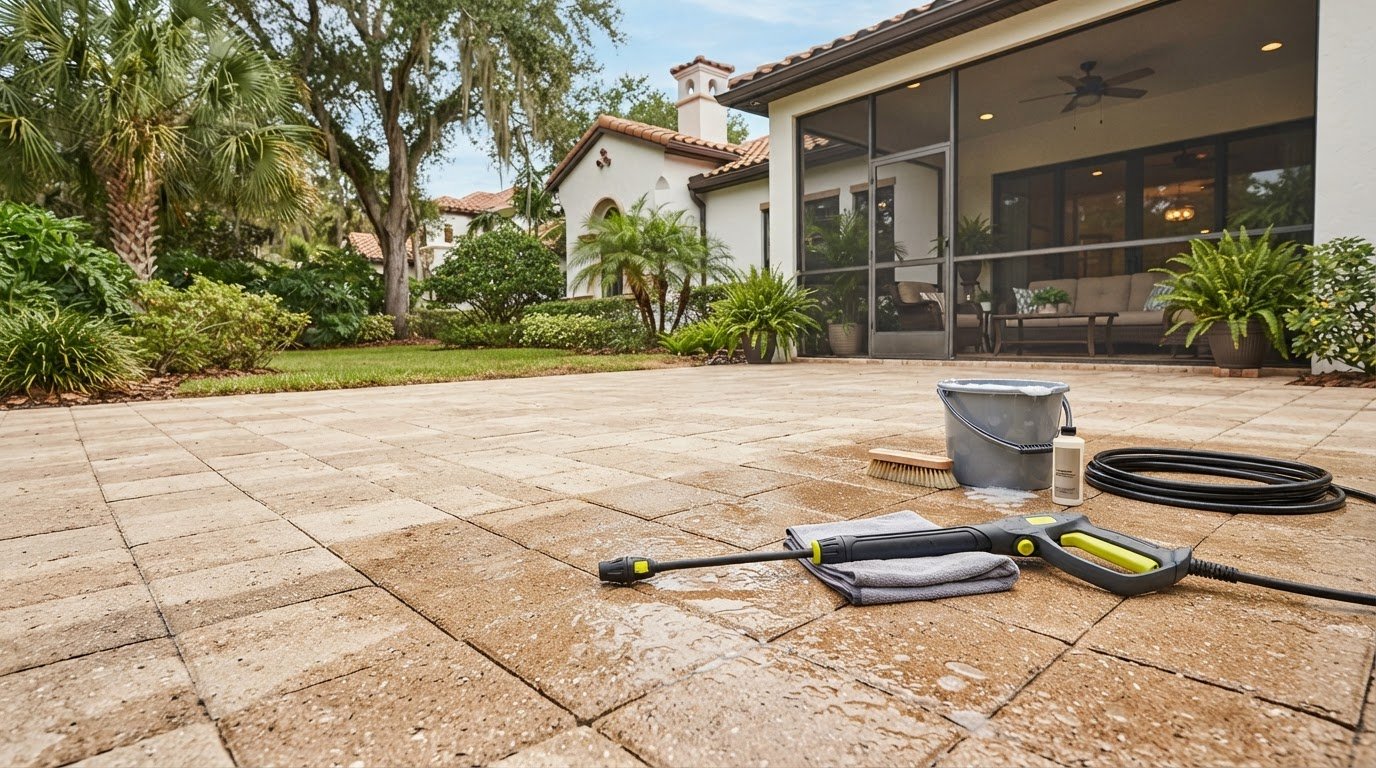
Paver patios offer a sophisticated aesthetic, but they present unique challenges for aluminum construction. When installing a base track on pavers, we ensure the perimeter stones are properly bedded and reinforced to handle the lateral pressure of the enclosure. This prevents individual pavers from tilting under the weight of the frame. Integrated drainage is also vital. We design the deck slope and enclosure track together to ensure that heavy Florida rains move away from the pool area, preventing water from trapping against the aluminum. By coordinating the paver style with the frame color, you create a seamless transition between your home and the water. This integrated approach eliminates the gaps and alignment issues that often occur when hiring separate contractors for hardscaping and screening.
Ensuring Structural Longevity
The longevity of your investment depends on regular professional oversight. Over time, the intense North Florida humidity and salt air can compromise even the most durable materials. A complete re-screen is typically necessary every 7 to 10 years, depending on the mesh grade and sun exposure. However, the aluminum frame can last much longer if the hardware is maintained. Rusted fasteners and corroded support cables are major safety risks in high-wind areas. Ignoring these signs can lead to structural failure during a storm. We specialize in identifying these weak points before they become critical failures.
Maintenance is a commitment to the safety of your family and the protection of your property. If you notice the screen spline popping out, sagging mesh, or orange rust stains around the base of your enclosure, these are clear indicators that the structural integrity is declining. Replacing rusted Tapcons with coated, corrosion-resistant fasteners can extend the life of your pool cage by years. To ensure your structure is ready for the next hurricane season, you can schedule a structural integrity check for your pool cage with our specialized team. Taking proactive steps now prevents costly emergency repairs and ensures your backyard remains a bug-free sanctuary for the long term.
Securing Your Outdoor Lifestyle for the Long Term
A durable, hurricane-rated enclosure is the key to reclaiming your backyard from the intense heat and persistent pests of North Florida. By prioritizing precision engineering and high-grade materials, you ensure your outdoor space remains a safe, low-maintenance retreat for years. We've explored how meeting St. Johns County building codes and integrating your hardscaping with your aluminum structure creates a unified, resilient foundation. Investing in a professional pool enclosure installation is a significant step toward protecting your property and enhancing your family's comfort.
North Florida Screen Enclosures is a locally owned Saint Augustine specialist with deep expertise in both aluminum construction and custom hardscaping. Our team provides the peace of mind that comes from specialized hurricane-rated maintenance and repairs designed for our unique coastal environment. We take pride in delivering functional, high-performance solutions that stand the test of time and provide lasting value for your home.
Get a Custom Quote from Saint Augustine’s Enclosure Experts
It's time to transform your pool area into the permanent, bug-free sanctuary you deserve.
Frequently Asked Questions
Do I need a permit for a pool enclosure in Saint Augustine?
Yes, a building permit is required for any new pool enclosure in Saint Augustine. While a July 1, 2026, regulation change exempted some minor home improvements under $7,500 from permitting, this exemption specifically excludes structural work. Because an enclosure is a permanent aluminum structure, St. Johns County requires certified engineering drawings to ensure the design meets current wind-load safety standards.
How much wind can a standard pool screen enclosure withstand?
Current structures built under the 8th Edition of the Florida Building Code are engineered to withstand wind speeds between 150 and 160 mph. In coastal areas like Saint Augustine, these high-velocity wind ratings are mandatory. The structural integrity is maintained through a combination of heavy-duty aluminum alloys, reinforced gusset plates, and high-tension stainless steel cables that distribute pressure across the entire frame.
How long does the installation of a new pool enclosure take?
The physical pool enclosure installation typically takes between three to five days once our crew is on site. However, the total project timeline is longer because it includes the pre-construction phase. Custom engineering, material fabrication, and the St. Johns County permitting process can take several weeks to complete before the actual assembly begins in your backyard.
Can I install a screen enclosure over an existing paver patio?
Yes, we can secure an enclosure directly to an existing paver patio. To ensure a stable foundation, we use specialized masonry anchors that pass through the pavers and into a concrete footer or a reinforced perimeter beam. This method prevents the aluminum frame from shifting or lifting during high winds while protecting the aesthetic of your hardscaping.
What is the difference between standard screen and pet-resistant mesh?
Standard screen is made of fiberglass and is designed for basic insect protection and debris management. Pet-resistant mesh is manufactured from vinyl-coated polyester, which is significantly more durable and resistant to punctures or tears from claws. While standard mesh offers excellent visibility, pet-resistant options provide the extra strength needed for households with active dogs or cats.
How often should I replace the Tapcons or fasteners in my pool cage?
In our salt-air environment, you should consider replacing your fasteners every 7 to 10 years. Standard steel screws often begin to show signs of corrosion or "bleeding" much sooner, which can weaken the connection between the aluminum and the foundation. Upgrading to stainless steel or Nylo-tec fasteners during a pool enclosure installation or maintenance visit provides much better long-term resistance to rust.
Will a pool enclosure make my pool area feel too hot?
A screen enclosure actually helps keep your patio cooler by providing a consistent layer of shade. The mesh blocks a portion of the direct UV rays, which can lower the ambient temperature on your pool deck and keep the water temperature more comfortable during the peak of summer. It also allows for natural airflow, ensuring your backyard oasis doesn't feel stagnant or enclosed.
Does a screen enclosure affect my homeowners insurance in Florida?
Most Florida insurance carriers classify a screen enclosure as an "unattached structure" or "other structure." You should notify your agent after the installation is complete to ensure it's added to your policy. Without specific coverage or a designated rider, the enclosure may not be protected against damage from major hurricanes or falling debris.
Comments