


Florida Paver Patio Design: Styles & Installation Guide

Why do some Florida backyards look like luxury resorts while others struggle with cracking concrete and pooling water after every afternoon storm? The difference often comes down to a fundamental choice between a temporary surface and a professional hardscaping plan. Most homeowners in Saint Augustine want a beautiful outdoor space, yet they find themselves frustrated by weeds growing between stones or surfaces that become painfully hot under the summer sun. It's a common struggle in our unique coastal environment.
In this guide, you'll discover the most resilient and stylish paver patio design ideas Florida has to offer for our specific North Florida climate. We'll show you how to select materials that maintain their structural integrity against high humidity and salt air while significantly increasing your property value. From choosing the right textures to managing drainage during heavy rainstorms, we're providing a complete roadmap for your project. You'll learn how to integrate these durable surfaces with pool enclosures and pergolas, and how to partner with a Saint Augustine contractor who understands the local terrain.
Table of Contents
Why Paver Patios are the Premier Choice for Florida Outdoor Living
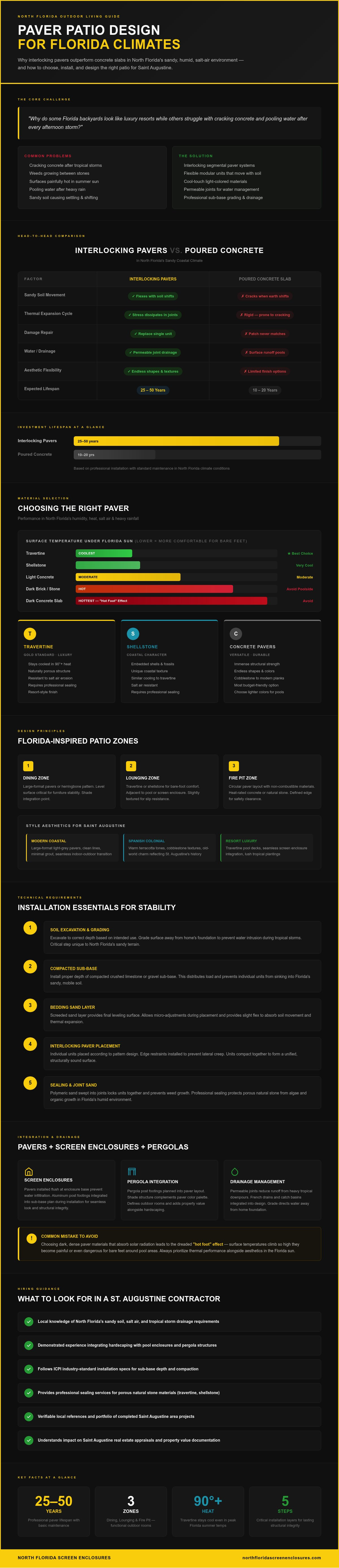
A segmental paver system consists of individual interlocking units typically manufactured from natural stone, clay brick, or high-density concrete. Unlike a single poured slab, these units create a modular surface that functions as a unified but flexible pavement. For homeowners in North Florida, this modularity isn't just about style; it's a structural necessity that accounts for our unique environmental challenges.
The primary benefit is the "Flexibility Advantage." Florida’s sandy soil is notoriously prone to shifting and settling, especially after heavy tropical storms or periods of drought. A rigid concrete slab cannot move with the ground. When the earth beneath it shifts, the slab cracks, creating unsightly fissures that are nearly impossible to hide or repair seamlessly. Because pavers are separate units, they can shift slightly without breaking. This resilience makes them the foundation of the most successful paver patio design ideas Florida residents choose for long-term structural integrity.
Pavers vs. Poured Concrete: The Florida Verdict
In the North Florida climate, the "heat-expand-contract" cycle is relentless. The intense sun heats outdoor surfaces rapidly, followed by cooling afternoon rain showers. This thermal shock causes rigid materials to expand and contract at rates that often lead to structural failure. Pavers dissipate this stress through their joints, maintaining a flat and even surface for decades.
Ease of Repair: If a single stone is damaged or stained by a grill spill, you can replace that specific unit without disturbing the rest of the patio. A concrete slab requires a messy patch that rarely matches the original color.
Permeability Benefits: The joints between pavers allow for better water management. This helps handle the heavy tropical downpours common in Saint Augustine by reducing surface runoff and preventing large pools of standing water.
Increasing Curb Appeal and Property Value
Professional hardscaping significantly impacts Saint Augustine real estate appraisals by expanding the usable square footage of the property. Whether your home reflects the Spanish Colonial history of downtown or the modern coastal vibes of Anastasia Island, pavers offer the aesthetic versatility to match. You can choose textures that mimic old-world cobblestone or sleek, large-format units for a contemporary look. This creates a functional transition from the indoor living room to the outdoor environment. Industry standards suggest that a professionally installed paver patio in Florida can last between 25 and 50 years with basic maintenance. This longevity ensures your investment provides a resort-style environment that integrates perfectly with other features like pool enclosures or pergolas.
Selecting the Right Paver Materials for the North Florida Climate
In North Florida, selecting a material is more than an aesthetic choice; it’s a technical decision that directly impacts your daily comfort. The most common mistake homeowners make is choosing a dark, dense material that absorbs solar radiation, leading to the "hot foot" effect. This occurs when the surface temperature climbs so high that it becomes uncomfortable for bare feet. Successful paver patio design ideas Florida residents prioritize focus on thermal performance, UV resistance, and the ability to withstand our corrosive, salt-laden air.
Natural Stone: Travertine and Shellstone
Travertine is widely considered the gold standard for luxury pool decks and patios in Saint Augustine. Its light color and naturally porous structure allow it to stay significantly cooler than concrete or brick, even in 90-degree heat. Shellstone offers similar benefits, featuring embedded shell fragments and fossils that provide a unique coastal texture. While these stones are highly resilient against salt air erosion, their porous nature means they require professional sealing to prevent algae and organic growth in our humid environment. These materials offer a sophisticated, resort-style finish that integrates seamlessly with high-end aluminum pool enclosures.
Concrete Pavers: Versatility and Strength
Concrete units are the primary choice for many Florida homeowners due to their immense structural strength and variety. They are available in an endless array of shapes, from weathered cobblestone to sleek, large-format modern planks. When following industry-standard paver installation guidelines, these interlocking systems create a surface that resists shifting in our sandy soil. Modern concrete pavers often include UV-stabilized pigments to ensure color longevity despite intense sun exposure. If you are planning a large-scale renovation, working with a local hardscaping expert can help you select a slip-resistant texture that ensures safety around water features.
Traditional Brick: The Historic Saint Augustine Look
For homes near the historic district or those with traditional architecture, clay brick provides a timeless aesthetic that never goes out of style. Brick is exceptionally durable against Florida’s acidic rain and maintains its structural integrity for decades. However, clay holds heat more than travertine. We typically suggest using traditional brick for shaded garden patios, walkways, or as decorative borders and accents rather than expansive, sun-drenched pool decks. This allows you to achieve a historic look without sacrificing the comfort of your primary lounging areas. Regardless of the material you choose, ensuring a high-friction surface is vital for maintaining a safe, slip-resistant environment during our frequent afternoon downpours.
Florida-Inspired Paver Patio Design Ideas: From Modern to Coastal
North Florida's architectural landscape varies from the historic streets of Saint Augustine to the sleek waterfront homes of Ponte Vedra. When exploring paver patio design ideas Florida homeowners often look for a "Modern Coastal" aesthetic. This style typically utilizes large-format pavers with clean, straight lines and minimal jointing to create a sophisticated, resort-style feel. By incorporating multi-level designs, you can establish distinct zones for dining, lounging, and fire pits without the need for vertical walls. These transitions are often defined using contrasting borders or intricate inlays that act as "outdoor rugs," guiding the eye and organizing the functional flow of the space.
Integrating native greenery is a critical component of a successful Florida hardscape. Instead of surrounding a patio with thirsty sod, many residents use planter beds filled with salt-tolerant species like Saw Palmetto or Coontie. To manage our heavy seasonal rainfall, we recommend utilizing permeable pavers for Florida drainage. These systems allow water to filter back into the ground naturally, reducing runoff and preventing the soil erosion that can undermine a patio's structural integrity over time. It's a practical way to protect your investment while adhering to local water management standards.
Popular Layout Patterns for North Florida Homes
The pattern you choose affects both the visual scale of your backyard and the surface's durability. A well-chosen layout can make a small area feel expansive or provide the structural locking needed for heavy use.
Herringbone: This 45-degree or 90-degree interlocking pattern is the strongest choice for high-traffic areas. It locks the pavers together tightly, preventing shifting even under heavy furniture or frequent movement.
Running Bond: By laying pavers in a linear fashion, you can create the illusion of more space. This is particularly effective in smaller Saint Augustine backyards where you want to draw the eye toward the horizon.
Ashlar Patterns: This style uses multiple sizes of pavers to achieve a random, natural stone appearance. It's a hallmark of the coastal look, offering a relaxed yet high-end finish that complements the natural textures discussed in previous sections.
Integrating Fire Pits and Outdoor Kitchens
A truly functional backyard should serve as a year-round extension of your home. When planning the footprint, it's essential to account for built-in amenities like fire pits and outdoor kitchens during the initial design phase. Fire features require specific safety clearances to protect nearby structures and aluminum screen enclosures. For those looking to create a complete outdoor culinary center, integrating Elite Roofing Systems provides the necessary shade and protection for expensive appliances. This ensures your investment remains shielded from the intense Florida sun and sudden afternoon showers, allowing for comfortable entertaining regardless of the weather.
Technical Essentials: Drainage, Stability, and Enclosure Integration
The technical execution of a project is what separates a long-lasting installation from one that fails within a few seasons. In the sandy terrain of North Florida, the sub-base is non-negotiable. We require 4 to 6 inches of compacted material to create a stable foundation that resists settling. This layer distributes the load of the pavers and prevents the uneven surfaces that often lead to tripping hazards. When exploring paver patio design ideas Florida homeowners must prioritize these structural elements to ensure their aesthetic vision remains intact for decades.
Stability also depends on containment. Without robust edge restraints, patios are susceptible to "paver creep," where the individual units migrate outward into the surrounding landscape. We combine these restraints with the application of polymeric sand. This specialized material hardens when misted with water, creating a flexible but durable bond that stops weed growth and prevents ant hills from destabilizing the joints. It's a small detail that provides significant peace of mind for the homeowner.
Installing Pavers with Pool Enclosures
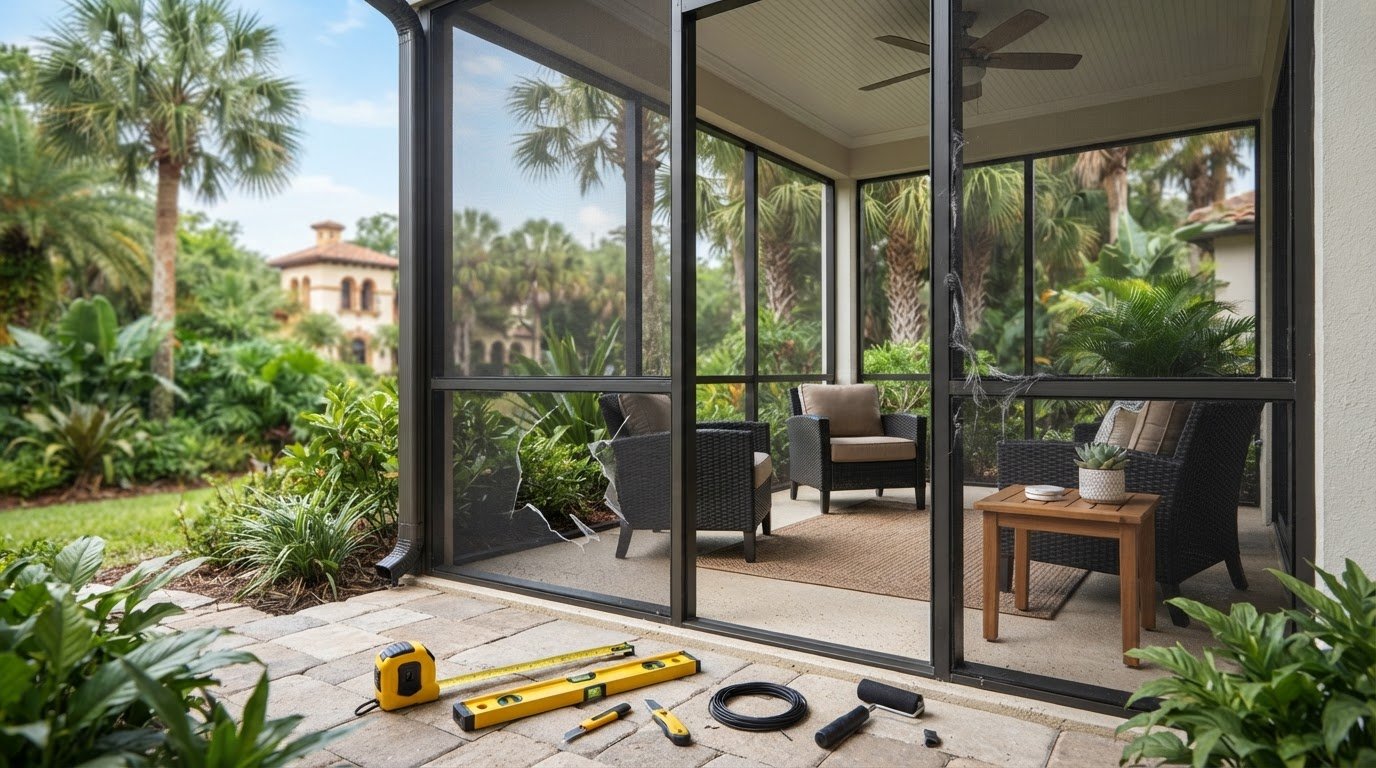
A common challenge in Saint Augustine is coordinating the installation of hardscaping with aluminum structures. If you're building a patio to support a cage, the footer design must be integrated from the start. Securing screen enclosure tracks directly to pavers requires precision to avoid cracking the stones or compromising the wind-load rating of the enclosure. For existing structures, a professional Tapcon replacement is often necessary to ensure the fasteners remain rust-free and structurally sound in our salt-air environment.
Drainage Solutions for Saint Augustine Yards
Managing "The Deluge" during a tropical storm is the most critical technical task for any local contractor. Proper grading prevents water from pooling against your home's foundation or under the screen enclosure. A 1-inch drop for every 8 feet is the standard for patio slope to facilitate natural runoff. In low-lying coastal neighborhoods, we often supplement this grading with channel drains or French drains to move water toward the street or a dedicated drainage basin. Permeable paver systems also offer an eco-friendly alternative by allowing water to seep directly through the surface into the aquifer. If you're ready to upgrade your outdoor space with a technically sound foundation, contact our Saint Augustine team for a professional assessment.
Finding the Best Paver Patio Contractors in Saint Augustine
Hiring a contractor in North Florida requires more than a simple price comparison. Homeowners must verify that a company holds the proper local licensing and comprehensive insurance required by St. Johns County. A major red flag in this process is the "site-unseen" quote. Because every Saint Augustine lot has different elevation and drainage challenges, a professional must visit the property to provide an accurate estimate. Reviewing local portfolios is also essential. You should look for projects that have successfully withstood Florida hurricanes and heavy tropical storm seasons without shifting or sinking. By evaluating various paver patio design ideas Florida residents can find styles that balance beauty with regional durability.
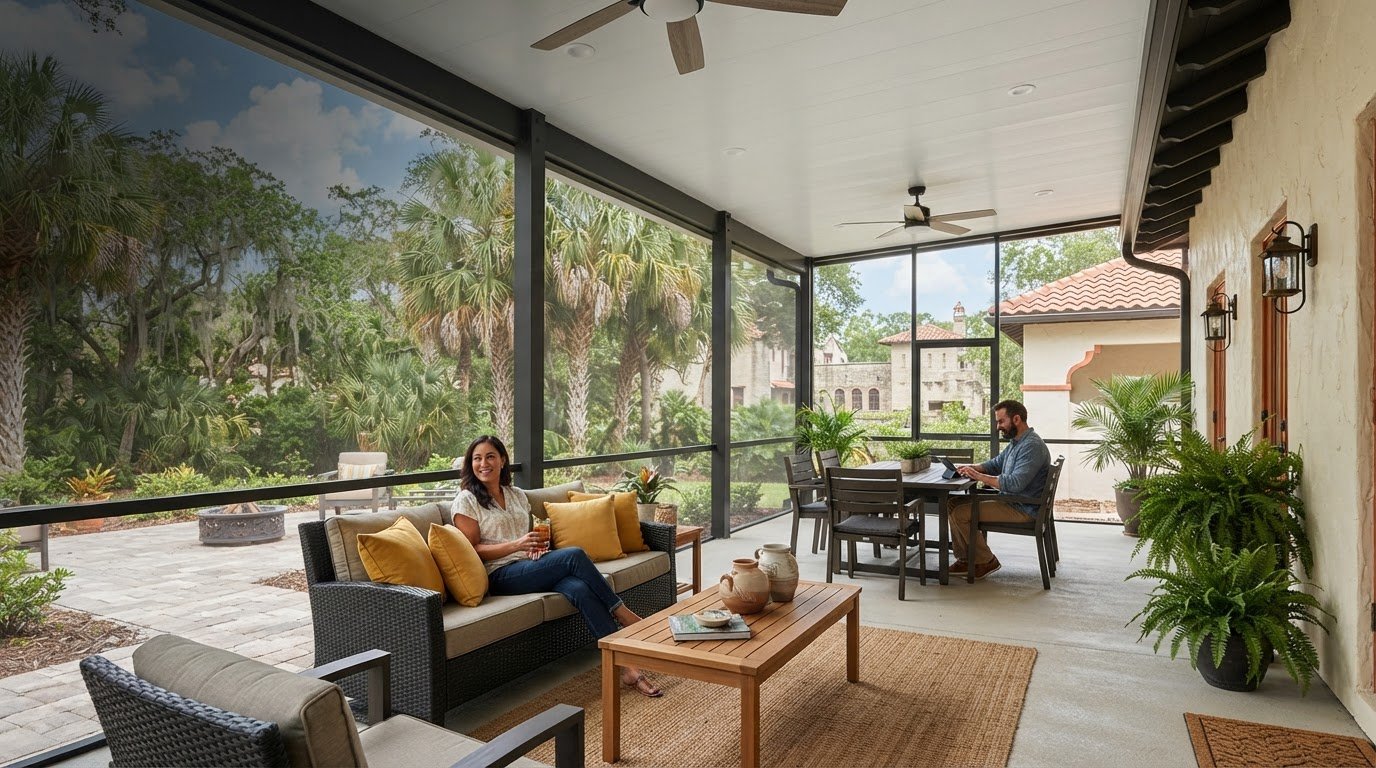
When researching paver patio design ideas Florida homeowners should prioritize "full-service" specialists who understand the entire outdoor ecosystem. Choosing a single contractor who manages hardscaping, aluminum enclosures, and pergolas eliminates the coordination headaches often found when multiple teams occupy the same job site. This unified approach ensures that the structural footers for your screen enclosure are perfectly integrated into the paver foundation from day one. It also guarantees that the aesthetic of the aluminum work matches the quality of the stonework, creating a resort-style environment that adds tangible value to your property.
Why Local Expertise Matters in North Florida
A local specialist understands the high water tables and sandy soil conditions unique to our coastal region. They are also familiar with the specific building codes and HOA requirements prevalent in communities throughout Saint Augustine. This local knowledge prevents costly delays or permit issues during construction. For projects involving water features, these experts can provide a custom pool enclosure installation that complements the new hardscape, ensuring a cohesive look for the entire outdoor living area.
The North Florida Screen Enclosures Difference
At North Florida Screen Enclosures, we take pride in our diligent craftsmanship and commitment to durable, high-quality workmanship. Our team doesn't just lay stones; we build integrated environments. We specialize in blending high-performance pavers with aluminum balcony railings and custom pergolas to create a seamless transition from your home to your yard. This holistic perspective protects your investment and ensures every component works together structurally. Contact us today for a professional consultation on your next Saint Augustine patio project and let us help you build a space that lasts.
Build Your Resilient Florida Outdoor Oasis
Creating a functional and stylish backyard in Saint Augustine requires a careful balance of aesthetic vision and technical precision. By selecting "cool-touch" materials like travertine and ensuring a robust, compacted sub-base, you protect your investment from the region's intense heat and shifting sandy soil. We've explored how proper drainage and the use of polymeric sand prevent common issues like pooling water and weed growth, ensuring your patio remains as durable as it is beautiful. These paver patio design ideas Florida residents use to transform their spaces are most effective when integrated seamlessly with pool enclosures or pergolas.
As locally owned Saint Augustine specialists, North Florida Screen Enclosures brings expertise in both hardscaping and aluminum construction to every project. We understand the specific environmental demands of the North Florida coast and provide custom designs tailored to your lifestyle. If you're ready to move from planning to installation, we're here to act as your trusted guide. Request a Free Estimate for Your Saint Augustine Paver Project today. Let's work together to build a high-performance outdoor space that your family will enjoy for decades.
Frequently Asked Questions
How much does a paver patio cost per square foot in Saint Augustine?
Custom project costs in Saint Augustine depend on material selection, site preparation needs, and property accessibility. While we don't provide standardized pricing, factors like choosing natural travertine versus high-density concrete pavers will influence the final investment. A professional on-site assessment is the only way to receive an accurate quote that accounts for the specific drainage and grading requirements of your coastal property and the unique layout of your backyard.
Do paver patios need a concrete slab underneath in Florida?
No, a concrete slab is typically not required or recommended for a standard paver installation in our region. Instead, we use a multi-layered system of compacted aggregate and sand. This flexible base allows the pavers to shift slightly with Florida’s sandy soil without cracking. A rigid concrete slab underneath can actually trap moisture and lead to structural failure if the ground settles unevenly over time.
What is the best paver color to keep my Florida patio cool?
Light-colored materials like white, ivory, or light tan are the most effective for maintaining comfortable surface temperatures. These shades reflect solar radiation rather than absorbing it. Natural travertine and shellstone are excellent choices for homeowners looking for paver patio design ideas Florida summers won't ruin. Avoiding dark grays or deep reds ensures the surface remains safe for bare feet even during the peak of July heat.
How do I prevent weeds from growing in my Florida paver patio?
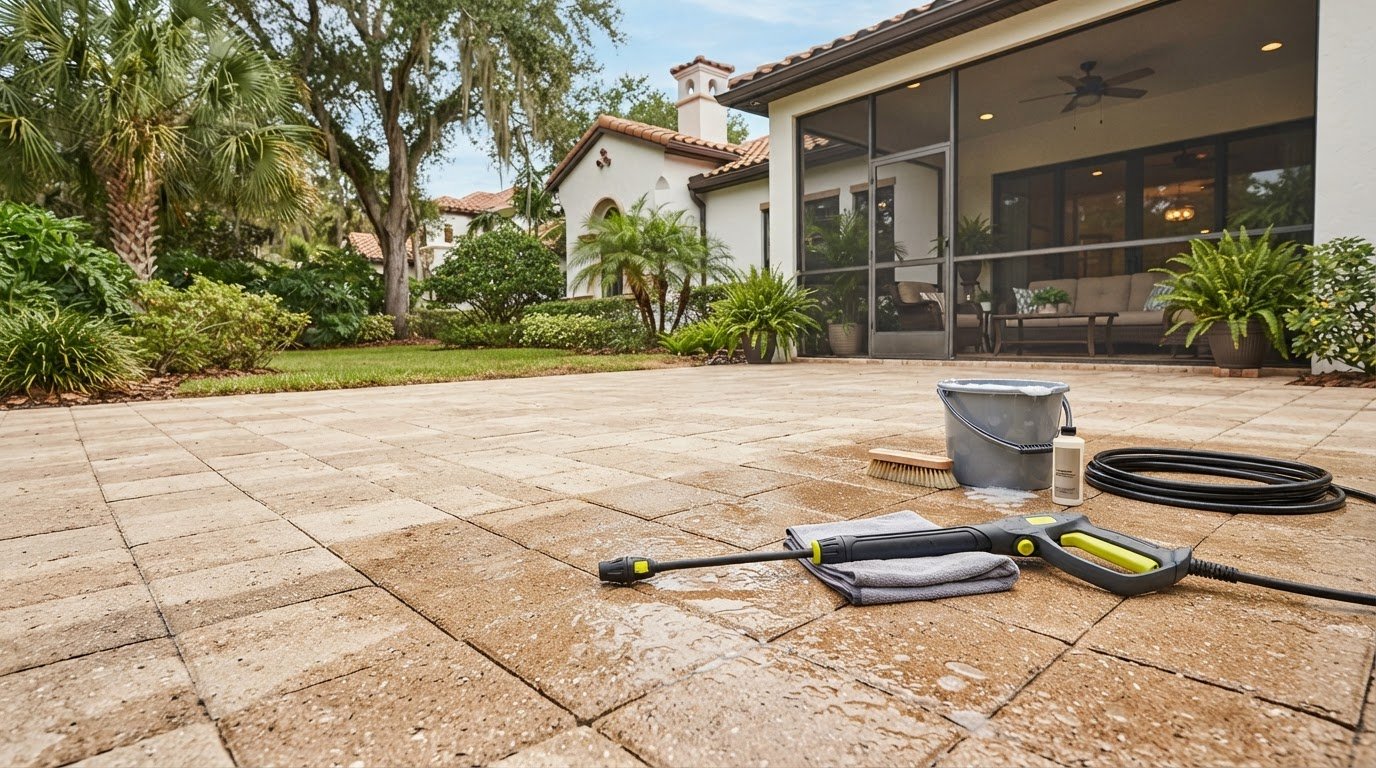
The most effective way to stop weed growth is the professional application of polymeric sand during the initial installation. This material hardens into a durable bond that fills the joints completely, leaving no room for seeds to take root. Regular maintenance, such as periodic cleaning and reapplying sealant, also helps maintain this barrier. High-quality installation ensures the sub-base is clean and well-compacted to discourage organic growth from beneath the stones.
Can you install a screen enclosure on top of pavers?
Yes, we frequently integrate aluminum structures with hardscaping. However, this requires specific structural planning to ensure the enclosure is properly anchored against high winds. We often install a concrete footer beneath the perimeter pavers where the enclosure track will sit. This provides the necessary wind-load resistance for the cage while maintaining the beautiful look of the pavers. It's a specialized task that benefits from a contractor who handles both services.
How long does it take for professional paver patio contractors to complete a project?
Most standard patio installations take between three to five business days once the site preparation begins. Larger or more complex projects, especially those involving pool enclosures or multi-level designs, may take longer. Timeline factors include the local weather, the complexity of the grading, and the availability of specific materials. We provide a detailed schedule during the consultation phase so you know exactly what to expect from start to finish.
Are pavers or concrete better for Florida driveways?
Pavers are generally superior for Florida driveways because of their flexibility and durability. Unlike concrete slabs, which often crack under the weight of vehicles or due to soil movement, pavers distribute weight across individual units. If a section becomes stained or damaged, you can replace specific stones without tearing up the entire driveway. This modularity provides a longer lifespan and better long-term value for North Florida homeowners who value structural integrity.
Do I need a permit for a paver patio in St. Johns County?
Permit requirements in St. Johns County depend on the total square footage of the project and your specific property's zoning limits. Generally, small paver patios might not require a building permit if they don't impact drainage easements or exceed lot coverage limits. However, if you're integrating a screen enclosure or pergola, a permit is mandatory. We recommend checking with the county building department to ensure your paver patio design ideas Florida project stays compliant.
Comments