


How to Protect Your Pool Cage in a Storm

A pool cage is only as storm-ready as its screens, doors, frame, and the space around it. Protecting your pool cage in a storm starts with checking for loose or damaged sections, securing doors, and moving outdoor items that could become windborne debris. Opening or removing screens on opposite sides can also create an airflow path that reduces wind pressure on the enclosure.
Preparing for hurricane season involves more than watching the forecast. Strong winds can drive branches and other debris into a pool cage, so inspecting it and making a clear plan can help reduce avoidable damage.
This guide explains how to check vulnerable areas, prepare screens and doors, manage nearby branches, and secure poolside belongings before a storm. You’ll also learn when damage calls for repair, with practical steps for protecting your pool area and investment.
Table of Contents
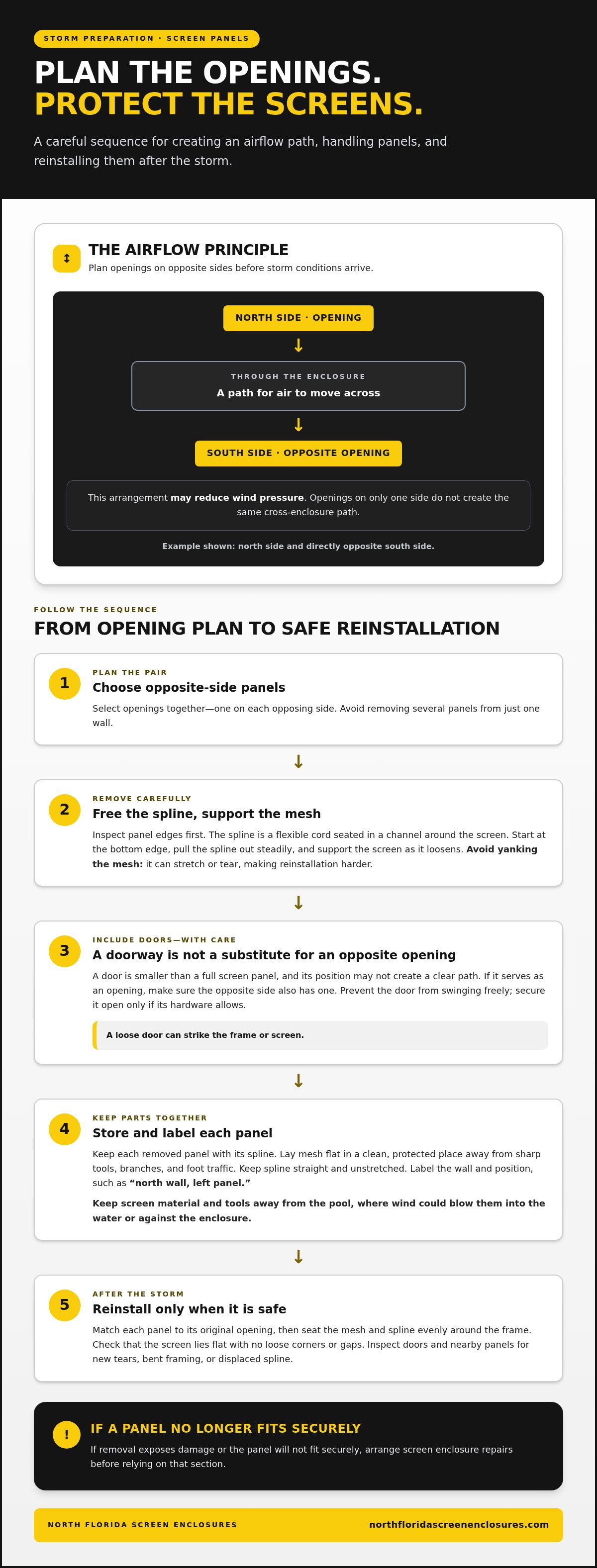
Removing screen panels or doors to allow airflow
Before storm conditions arrive, plan openings on opposite sides of the enclosure to create a path for air to move through. This may reduce wind pressure on the structure. Opening panels on only one side does not create the same cross-enclosure path. For example, choose a panel on the north side and one directly opposite on the south side. Plan the openings together rather than removing several panels from just one wall.
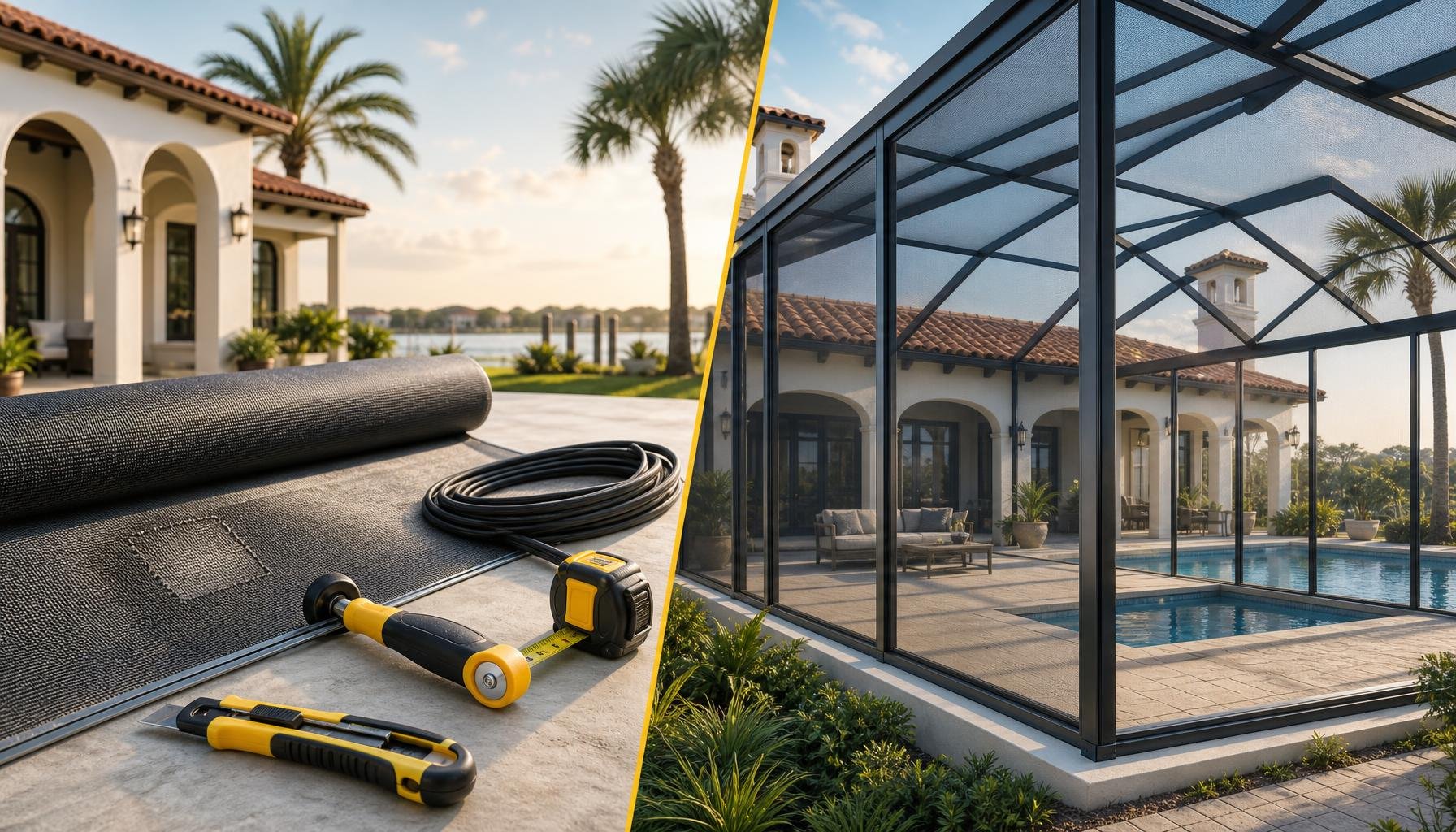
Identify the panels you plan to remove and inspect their edges first. Screen panels are held in place by spline, a flexible cord seated in a channel around the screen. To remove a panel, start at the bottom edge by pulling out the spline. Work steadily along the edge and support the screen as it loosens. Avoid yanking the mesh, which can stretch or tear it and make reinstallation harder.
Include doors in your airflow plan, but don’t assume an open door replaces openings on opposite sides. A doorway is smaller than a full screen panel, and its position may not create a clear path through the enclosure. If a door will serve as an opening, make sure the opposite side also has one. Prevent the door from swinging freely, and secure it open only if its hardware allows. A loose door can strike the frame or screen.
Keep each removed panel and its spline together for reinstallation after the storm. Lay the mesh flat in a clean, protected place, away from sharp tools, branches, and foot traffic. Keep the spline straight and avoid stretching it. Label panels by wall and position, such as “north wall, left panel,” to make replacement easier. Don’t leave screen material or tools beside the pool, where wind could blow them into the water or against the enclosure.
Reinstall screens only after the storm has passed and it’s safe to approach the enclosure. Match each panel to its original opening, then seat the mesh and spline evenly around the frame. Check that the screen lies flat, with no loose corners or gaps. Inspect doors and nearby panels for new tears, bent framing, or displaced spline. If removal exposed damage or a panel no longer fits securely, arrange screen enclosure repairs before relying on that section.
Common structural weak points
Inspect the base connections where the upright posts meet the concrete deck. Look for visible gaps, shifted plates, loose-looking fasteners, or cracks around an anchor. Compare each post base with its neighbors and note any movement or separation. Don’t pry at connections or climb the frame. A photo taken from ground level can help you track changes and describe their location when arranging an assessment.
Check each frame joint where beams meet posts, especially at corners and roof intersections. Look for bends, separation, missing fasteners, or misalignment. A roof beam that no longer meets its post cleanly needs attention before a storm. An intact screen does not prove the frame is sound: mesh can remain undamaged even when a metal connection has shifted. Inspect the frame itself from a safe position.
Look for torn mesh, pulled edges, and spline that has lifted from its channel. A loose panel can flap in the wind and strain neighboring sections. Check door frames, hinges, latches, and nearby screens. A door that won’t close squarely may point to damage nearby. Note the affected wall and panel, such as the rear corner beside the pool steps. Clear notes help distinguish isolated screen damage from a broader frame concern.
Look above and around the cage for branches that could strike its roof or sides. Branches can damage pool-cage screens. From the ground, note overhanging limbs, dead branches, and trees close to the enclosure. Don’t cut large limbs yourself or work near overhead electrical lines. Trimming or removing hazardous branches before storm conditions can reduce the risk of impact damage to screens and framing.
Sort your findings by type: loose screen, damaged door hardware, shifted frame connections, or cracking around a base. Don’t cover a structural concern with a quick screen patch. Screen repairs address mesh damage, while a bent or separated frame needs a structural assessment. If a post base has moved or a beam is displaced, keep people clear of the area and arrange an enclosure inspection before the next storm threatens.
For visible tears or damaged frame sections, enclosure damage assessment can help identify the appropriate repair.
Hurricane-season preparation timeline
A Florida pool-cage checklist starts with inspecting the enclosure, trimming trees, and securing loose items. Before threatening weather arrives, switch off pool equipment and remove loose skimmer lids. Keep the filter system off, but don’t drain it.
Homeowners insurance coverage for hurricane-related cage damage depends on the policy, exclusions, deductible, and cause of loss. Review the wind and hurricane provisions. Photograph the enclosure before a storm and document any damage afterward.
Late winter or early spring: Arrange an enclosure inspection and address damaged screens, loose connections, or frame concerns before hurricane season. Look for visible bends in aluminum members and separation at joints. Trim nearby branches and remove dead limbs that could strike the cage. Planning early gives you time to address problems before storm forecasts become urgent.
Before June 1: The Atlantic hurricane season officially begins June 1 annually. Use that date as a reminder to review your storm checklist, locate equipment shutoffs, and confirm you can secure outdoor belongings. Walk the pool area and note furniture, skimmer lids, tools, and other items that could become airborne.
When a storm threatens: Move loose poolside and patio items indoors. Remove skimmer lids and other unsecured objects. Switch off electrical equipment, including pumps, lighting, heaters, and chlorinators, to reduce electrical hazards. Turn off the pool filter system, but don’t drain it. Water left inside adds weight that helps hold the equipment down.
Before securing a pool cover: Don’t use a cover held in place by water tubes or other weights, which high winds can blow away. For an attached safety cover, tighten the straps without fully compressing the springs. Keep the straps taut so the cover stays secured while the springs retain movement.
As conditions worsen: Stop outdoor preparation before dangerous winds or rain arrive. Don’t climb on the enclosure or handle screens in unsafe weather. Secure belongings and operate equipment while conditions are still safe, then follow local emergency instructions and stay indoors.
After the storm passes: Photograph the pool cage before cleanup, including torn screens, bent frame sections, and damaged connections. Note when the damage occurred and keep relevant policy details. Don’t approach a damaged enclosure until it’s safe, especially if electrical equipment or downed lines are nearby.
Bring poolside and patio belongings indoors before a storm so loose items don’t become projectiles. Remove pool skimmer lids and other unsecured objects as well.
Storm risks to pool cages
Wind, branches, and flying debris can damage screens, frame connections, and nearby pool surfaces. Assess the cage from a safe position, then respond according to the type of damage.
Assess Storm RisksWalk the pool area before a storm to identify exposed sides, overhanging limbs, and vulnerable screen panels. Branches can tear mesh or strike the aluminum frame, while windborne objects can hit the enclosure or land in the pool. Note nearby trees, loose patio items, and existing tears. Don’t inspect beneath unstable branches or climb onto the cage.After severe weather, look for new gaps, displaced framing, and impact marks from debris. A small tear may indicate a direct strike, while a bent beam suggests a structural concern. Check pool tiles near impact areas too, as falling branches or heavy debris can damage them. Keep people away from visibly shifted frame sections until the area is safe.
Check Pool Cage Wind LimitsCheck the enclosure’s design information rather than assuming every aluminum cage has the same wind capacity. Aluminum is strong and lightweight, but the completed structure’s performance depends on its design and construction. A pool enclosure capable of withstanding 160 mph winds requires specialized expertise. That figure describes a specific capability, not a typical rating to assume for every existing cage.Review project documents for the enclosure’s design specifications and compare them with visible conditions. Loose connections, damaged framing, or earlier alterations can affect the structure. Don’t judge wind resistance by the metal’s appearance or the screen’s condition alone. If an older cage has unknown specifications, look for signs of damage and have structural concerns assessed before storm season.
Understand code and permit considerations. Pool enclosure projects in Florida must follow the Florida Building Code. Replacing screens on an existing, structurally sound enclosure generally doesn’t require a permit, while replacing or altering the frame does. This distinction matters after storm damage: mesh work is different from changes to structural framing. Determine whether damage affects the screen alone or the frame too before repair work begins.
Respond to storm damage carefully. Once conditions are safe, photograph affected panels, frame members, and connections before moving debris. Note where each problem appears, such as a torn panel beside a bent roof beam. Don’t pull on a damaged frame or attempt repairs while it’s unstable. Keep people clear of loose components and contact a qualified repair professional for screen or enclosure damage.
Separate surface damage from structural concerns. Inspect the surrounding frame to distinguish a torn screen from a bent post or separated connection. If a panel is damaged but the frame remains aligned, note the tear and nearby spline. If posts, beams, or base connections have shifted, treat the issue as structural. This distinction helps you describe the problem accurately and prevents a screen patch from hiding frame damage.
How to prepare a pool cage for a hurricane or severe storm
Prepare the pool area as a whole, not just the screen structure. A practical plan for protecting your pool cage in a storm also considers nearby trees, pool water, covers, and equipment.
Trim nearby branches and remove dead limbs before storm conditions arrive. A branch can strike the cage, tear mesh, or damage nearby pool equipment and property. Pay attention to limbs overhanging the enclosure and pool deck. Remove loose yard debris too, since wind can carry it into screens or frame members. Finish tree work before weather worsens, never during high winds.
Move pool furniture and patio items indoors, including chairs, cushions, and lightweight tables. Don’t use the pool to store loose objects, even waterproof furniture, as they can damage its finish. If you can’t store an item indoors, secure it as safely as possible outside the water. Clear the area around the cage so objects can’t strike its screens.
Consider the expected storm strength when deciding whether to leave a pool cover in place. If you use one, add padding between the cover and pool edge to reduce abrasion as wind moves it. Don’t use a cover held down by water tubes or other weights, which high winds can blow away. Emergency management guidelines note that deck-anchored attached safety covers are designed to hold up better in hurricane-force winds.
Protect pool equipment from direct wind and possible water exposure. Sandbags around equipment can form a barrier against direct wind. If equipment could be exposed to water, cover it with a tarp or heavy plastic sheet, then secure the covering with duct tape and rope. Keep the covering clear of safe access and secure any loose material that wind could catch.
Leave the pool full rather than draining it before a storm. Saturated ground around an emptied pool can create hydrostatic pressure that may damage the pool and enclosure. Protecting your pool cage in a storm also means looking after pool water quality: add chlorine and algaecide before the storm, then run the pump for a few hours to circulate the chemicals. Follow product directions when handling pool chemicals.
Prepare propane tanks and electrical equipment before conditions worsen. Keep propane tanks upright and chain them to a secure object away from the home. If a pool pump motor could be submerged, disconnect it and bring it indoors. Switch off pool electrical equipment before the storm, and don’t handle wet equipment or cords in unsafe conditions.
For help addressing enclosure concerns before severe weather, schedule a pool enclosure assessment with North Florida Screen Enclosures.
North Florida Screen Enclosures: Pool Enclosures
North Florida Screen Enclosures provides pool enclosures, complete re-screens, and screen enclosure repairs for homeowners addressing storm damage or planning an upgrade. If an inspection reveals torn screens, loose sections, or a frame concern, these services can help restore or improve the pool area. The appropriate work depends on whether damage affects the mesh alone or the enclosure structure, so describe the affected area and what you observed.
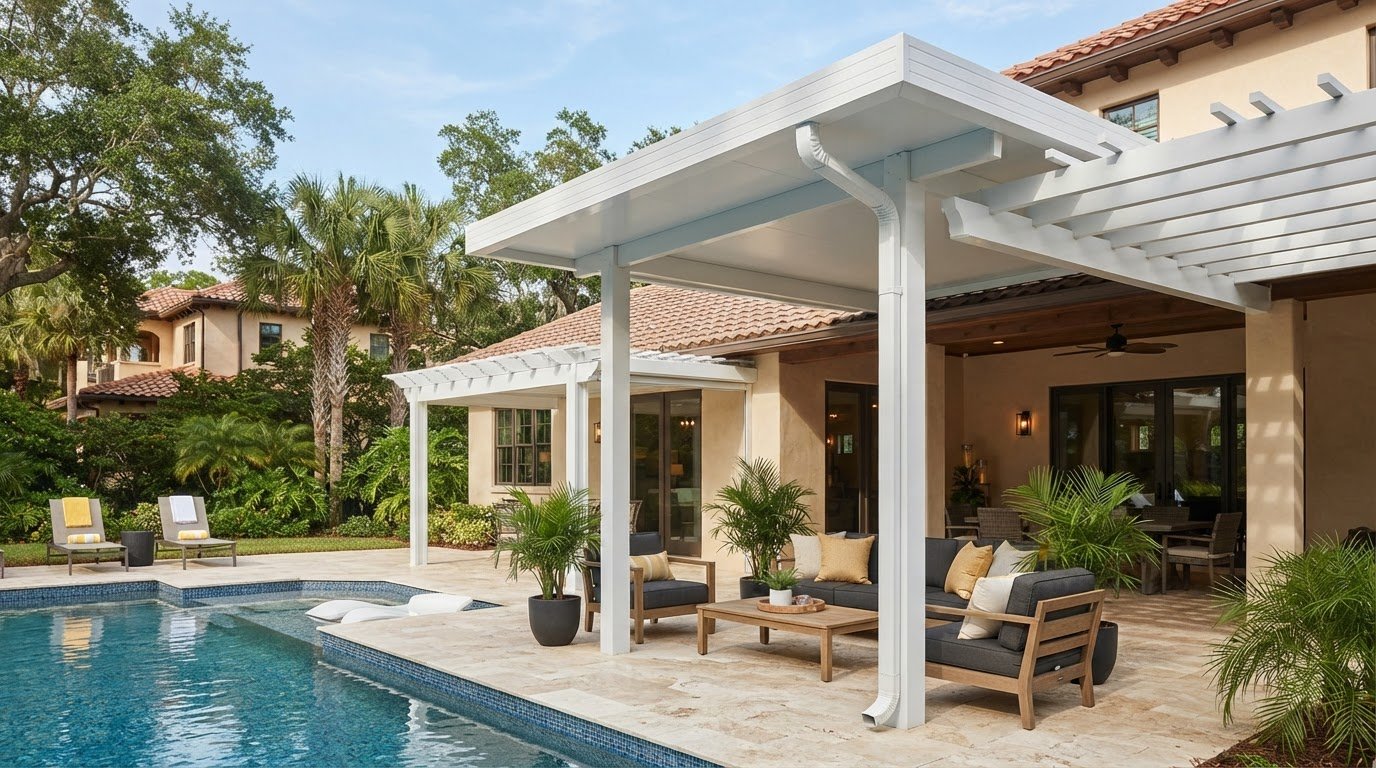
For broader outdoor improvements, North Florida Screen Enclosures also offers patio covers, Elite Roofing Systems, aluminum balcony railings, and paver patios. These services can be part of a coordinated exterior project alongside pool-area work.
Contact North Florida Screen Enclosures to discuss your pool enclosure project.
Build Storm Readiness Into Your Home Care
Make storm preparation part of regular home care, not a last-minute response to a forecast. Keep a simple record of enclosure concerns and completed work, then review it before each season. This history can help you spot changes and make informed decisions about maintaining your outdoor space. Protecting your pool cage in a storm is also a chance to consider how the enclosure fits into your wider exterior plans.
North Florida Screen Enclosures offers pool enclosures, patio covers and elite roofing systems, and aluminum balcony railings. These options can support homeowners planning coordinated improvements around their pool and patio areas. If you’re considering an enclosure project or need to discuss repair needs, contact North Florida Screen Enclosures to explore a practical next step for your home.
A considered plan starts with understanding the condition of your space. Take that first step and keep your outdoor area ready for the seasons ahead.
Frequently Asked Questions
Should pool cage screens be removed before a storm?
Removing selected panels can help create an airflow path, but you don’t need to remove every screen. If you use this approach, open opposite sides rather than stripping panels from one wall. Remove screens before dangerous conditions arrive, keep each panel and its spline together, and store them in a protected place. Leave the panels in place if wind or rain makes removal unsafe.
How do you secure pool cage doors and panels in high winds?
Close each door and engage its latch before winds rise. Check that it closes squarely and the latch catches without forcing it. Don’t use improvised restraints that could damage the door or frame. If you remove a selected screen panel, keep its spline with the mesh and store both safely. Don’t handle doors or panels once strong winds make the enclosure unsafe to approach.
Can pool cage roofs withstand hurricane-force winds?
Some enclosures are designed for substantial wind loads, but a roof’s capacity depends on its specific design and condition. Don’t assume one structure’s stated wind rating applies to another. Design details, connections, alterations, and existing damage all matter. Use project documents to identify your roof’s specifications, or have structural concerns assessed rather than judging capacity by appearance.
How can you protect pool cage posts and anchors from storm damage?
Before storm season, inspect each post base for separation, movement, or cracking in the surrounding concrete. Compare neighboring connections and photograph any changes to track them. Don’t try to tighten, replace, or reinforce an anchor in dangerous weather. If a post has shifted or its base looks damaged, keep people away and arrange an assessment before the next storm.
Should patio furniture and pool equipment be moved before a storm?
Yes. Store movable furniture and small loose items indoors so wind can’t drive them into screens or framing. Don’t put furniture in the pool, since it may damage the finish. Follow the manufacturer’s instructions for pool equipment and switch off electrical components before conditions worsen. If equipment could be exposed to water, protect it before the storm, and don’t handle wet electrical equipment afterward.
Comments